

The agent harness performance optimization system. Skills, instincts, memory, security, and research-first development for Claude Code, Codex, Opencode, Cursor and beyond.
Deliberation
Ask Codex, Gemini, Grok, and 400+ OpenRouter models (Qwen, Kimi, DeepSeek) for second opinions or arbiter-mediated consensus. One MCP server for Claude Code, Codex, Cursor,…
Install
$
/plugin marketplace add antonbabenko/agent-pluginsInstall command taken from the project's README or registry entry. Always review code before running it.
README excerpt
Read full README on GitHub →Deliberation
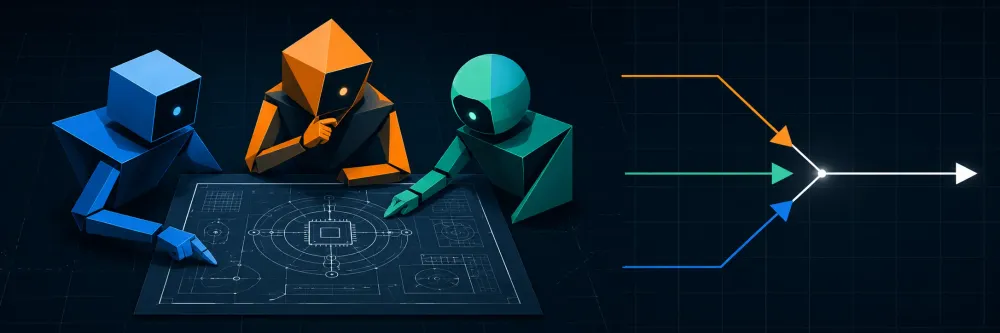
Get a second opinion from GPT, Gemini, and Grok in Claude Code, Codex, Cursor, Kiro, Antigravity, OpenCode, or any other MCP host - plus 400+ more models through OpenRouter, including Qwen, Kimi, and DeepSeek. Seven domain experts (Architect, Code Reviewer, Security Analyst, and four more) review your plans, find bugs, and debate edge cases until they agree.
 Recent blog post: Meet Deliberation: 400+ models is easy, knowing which ones earn a place is hard.
📸 See a full /consensus run: round 1 disagreement to round 5 convergence
... a few moments later ...
📸 See /ask-all stage a 2-round architect debate: three models, three verdicts, then each critiques the others - disagreement matrix included
When three models argue, the real bug reveals itself. Round 1 = independent top findings. Round 2 = each model dunks on the others' picks. The disagreement matrix shows where they diverge; the conclusion shows what to actually fix first.
📸 See the local dashboard draw a /consensus run as a timeline: one lane per voice, verdicts on each, final report alongside
The dashboard (/deliberation:dashboard, opt-in with "dashboard": { "enabled": true }) is a read-only page on 127.0.0.1. Live follows runs as they happen, Runs keeps the history (with the repo and workspace each run came from, grouped by git remote org/repo, and a project filter that picks a whole repo or one workspace), Config shows the effective config, Stats shows usage and provider health, and Analyzer shows which models agree more than they add (drop candidates), which projects fail or run slow, and whether request size predicts latency and timeouts, with a suggested timeout. For a run you get:
- the header: tool, elapsed time, status, round, tokens, errors, and expert
- the phase strip: blind, peers, adjudicate, converged or revise, each with its time offset
- the timeline: rounds across the top, then one lane for the arbiter and one for each panel voice, with each call drawn as a pulse and labelled with its verdict. Drag across the plot to place two cursors and measure the time between them
- the event table: every journal event with its sequence number, time, kind, and round
- the side panel: the final report and the prompt
The CAPTURE and PII badges show what was recorded. The default capture is metadata only, and PII is redacted unless dashboard.showPII is on.
What is Deliberation?
Your coding agent can ask GPT, Gemini, Grok, or any OpenAI-compatible model (via OpenRouter) for help through MCP. Deliberation handles the wiring for each provider so you just write the prompt. Each expert has a distinct specialty and can advise or implement.
It is not tied to Claude Code. The same MCP server runs on any MCP host, and Codex, Cursor, Kiro, Antigravity, and OpenCode also get native plugins with the experts and delegation guidance built in (see Install). Claude Code gets the most complete version: slash commands and auto-routing rules on top of the same server.
Similar plugs

Reverse engineer anything with agents, from app behavior down to native binaries.

Build Agentic workflows, RAG pipelines, with rich AI model and tool support on one collaborative workspace. Deploy on cloud, VPC, or self-hosted, so teams move from prototype…

User-friendly AI Interface (Supports Ollama, OpenAI API, ...)

A cross-platform desktop All-in-One assistant for Claude Code, Codex, OpenCode, OpenClaw, Grok Build & Hermes Agent. Only official website: ccswitch.io

Open-source Python library for AI browser agents, plus Browser Use Cloud: stealth browsers and a hosted agent API.